Metal mesh guards fitted to your existing gutters, cutting down on how often you need a cleaning through heavy leaf-drop and winter snow.
Guards don't eliminate the need for gutter maintenance entirely, but on a lakeshore street lined with mature maples and oaks, they cut the number of cleanings you need roughly in half - and more importantly, they keep the gutter trough from packing solid with wet leaves right before the first freeze, which is the single biggest driver of ice dams in this part of Wisconsin.
We install a metal mesh guard system fitted to your existing gutter profile - no need to replace the gutters themselves in most cases. Leaves and heavy wet debris slide off the top of the mesh instead of collecting inside, while water still passes through freely, including during the rapid spring thaw when volume is highest.
Metal mesh holds up better than plastic or foam-insert guards under Wisconsin's freeze-thaw cycles, which cause plastic to become brittle and crack over a few winters. It's a bigger upfront cost than the cheaper inserts sold at big-box stores, but it's the version that's still doing its job five winters in, rather than something we're pulling off in pieces after two seasons of Wisconsin weather.
We get the most guard installation calls from homeowners who are tired of the twice-a-year cleaning cycle, or who travel enough in the fall that they can't reliably schedule a cleaning before the first freeze. Guards are also a common add-on after a repair visit, once a gutter system has been re-hung and sealed and the homeowner wants to protect that investment going forward.
| Home Size | Typical Price |
|---|---|
| Materials + install, per linear foot | $8 - $11 |
| Typical single-story home (150-200 ft) | $1,200 - $2,200 |
| Two-story or complex roofline | $2,200 - $3,800 |
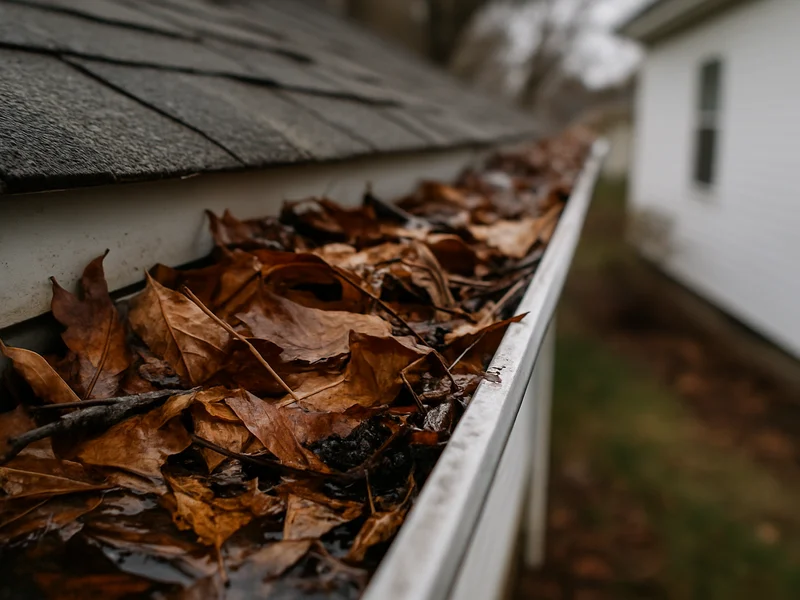
Before
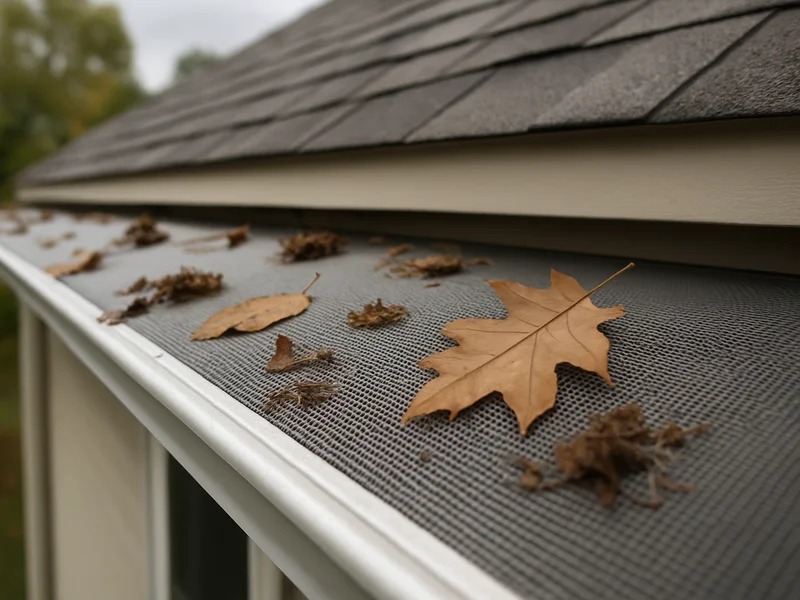
After
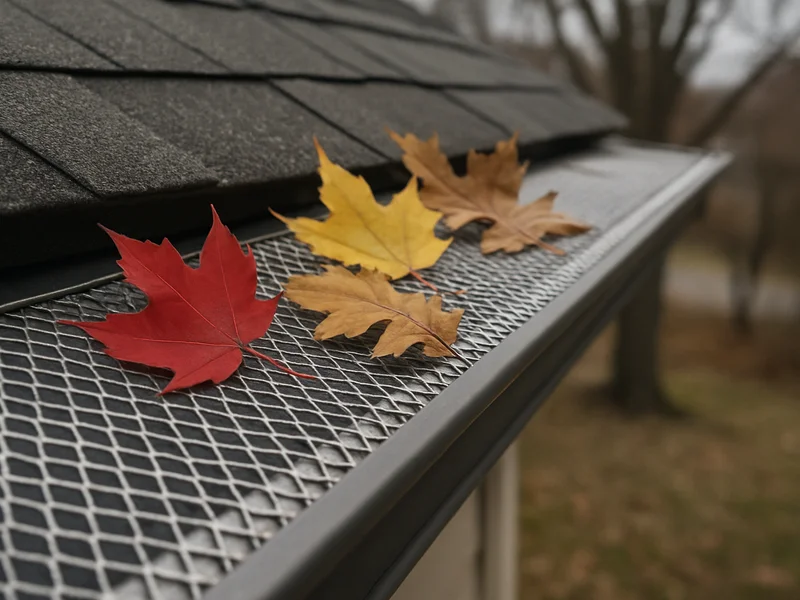
Ice dams start with debris. A gutter packed with wet leaves freezes into a solid plug at the roofline; when the sun warms the roof above it, meltwater runs down and hits that frozen plug with nowhere to go, so it backs up under the shingles instead. A properly fitted mesh guard keeps that leaf mat from forming in the first place, which is the biggest single thing a homeowner along the Lake Michigan lakeshore can do short of a full roof and gutter replacement to reduce ice-dam risk.
Guards work best on a system that's already sound - if your gutters are sagging or pulling away from the fascia, we'll flag that during the estimate, because guards installed over a failing gutter just delay a repair that's coming anyway. On healthy gutters, though, most homeowners here go from two or three cleanings a year down to one light annual check, and the reduction in ice-dam-related repair calls is even more noticeable over a few winters.
It's worth being direct about what guards don't fix: they address debris-driven ice dams, but ice damming can also be caused by inadequate attic insulation or ventilation, which lets warm air escape through the roof and melt snow unevenly regardless of what's in the gutter. If we see signs that insulation or ventilation might be a bigger factor than debris, we'll tell you honestly rather than sell guards as a fix for a problem they won't solve.
No, but they cut it significantly - most homes go from 2-3 cleanings a year to one light annual check, especially under heavy maple or oak canopy.
They reduce the leaf buildup that causes many ice dams, but they don't prevent every ice dam - roof insulation and ventilation play a role too. We'll tell you honestly if guards alone will solve your specific issue.
Typically $8-$11 per linear foot installed, so $1,200-$2,200 for a typical single-story home, more for larger or complex rooflines. We give a firm per-foot price before starting.
On most standard residential gutters, yes. If your gutters are already sagging or damaged, we'll recommend repairing those sections first so the guards have something solid to attach to.
For this climate, yes. Plastic and foam inserts tend to become brittle and crack after a few Wisconsin winters of freeze-thaw cycling. Metal mesh costs more upfront but holds up significantly longer.